Monday, 2 May 2016

Documentary: Script- Draft 2

After our story outline meeting, I began working on a second script draft.

SCRIPT- DRAFT 2

I started by deleting everything from the original draft because the entire story had been changed. Next, using the story outline, I wrote all of the narrator's dialogue in the order it would be heard on screen. I started with the introduction, which was very important as it set the entire documentary up. As part of the story outline, the narrator sets up the location and, after the opening titles, sets up the first character. I then went through the script and came up with dialogue for the narrator to say at the beginning of each section to help the story flow. Finally, I wrote the conclusion, something I knew would change after we had filmed everything.

Next I went through the script and added in any relevant quotes from our characters that I had gathered during the interviews I conducted during my research. After this I filled in any gaps with descriptions of what the audience can expect to see/hear on screen between quotes. And finally I filled up the visual side of the script, trying to come up with a visual for almost every line spoken by either the narrator or the characters.

Page 1 of the 2nd draft

I will use this script to create a shot list, and to help me write questions for the on screen interviews. The third draft will not be written until filming has been completed.

Documentary: Story Outline Meeting

After reviewing the 1st draft of the script, it was clear some changes needed to be made to the structure of the documentary. Using some advice from Helen, our group sat down to create a new story outline.

STORY OUTLINE MEETING

We started by thinking about the introduction, and how we were going to introduce the allotments to the audience, without introducing the problem. Helen had said that it would be a good idea to introduce the problem a little later into the documentary to help keep the audience interested. We decided to start by introducing the location, Margate, then our first character, Jamie, and then the allotments. We wanted to convince the audience that allotments were great, before we introduced the problem.

Next we started to think about how we could introduce the problem. We thought it would be a good idea to do this by using one of the facts we found during our research, as the facts were the basis of the problem. Then after introducing the problem, we started thinking about introducing the solution, which was our main story, the Veg-box scheme.

Then we moved onto thinking about how we could introduce our secondary characters, the volunteers. After the volunteers, we wanted to talk about the wildlife aspect of the story, which were the Bees on the allotments and the benefits they have. We thought about how we could show this on screen, which would involve using a GoPro.

After that we spoke about how we could show the process of packing and handing the bags to customers. Currently we don't know if we can follow any customers, so we also thought about how we could show this if we couldn't follow anyone.

And finally, we thought about the conclusion. We knew this would be difficult to write and so we decided to leave that until we had a bit more story to work with. The conclusion will change after we have filmed everything.

Throughout this meeting, Cheyenne kept notes and wrote an A/V script for me to use when I write the next script draft.

A/V Story outline

Sunday, 10 April 2016

Documentary: Documentary Interview Styles

As part of my pre-production for the documentary unit, I decided to look at some different interview styles.

DOCUMENTARY INTERVIEW STYLES

When I say interview styles, I mean the different ways it can be done, in terms of camera positioning, interviewer/interviewee positioning, and location/sound.

FRAMING/CAMERA/CAMERA POSITIONING

The most common type of interview framing is a medium shot, usually cutting at the waist or chest.


Sometimes you can shoot with that framing, but have the interviewer in shot too.


And sometimes you can shoot the interview either from the side or in close up, however only really when you have more than one camera.


One thing you need to think about is how many cameras you are using, and this usually depends on how you plan to film the interview. If you are just filming the interviewee's responses, then one or maybe two (for close ups) cameras will be needed. If you are planning to film a shot with both the interviewee and the interviewer in, you may want three, one for the interviewer, one for the interviewee, and one for close ups or wides. However, if you don't intend to show both the interviewer and the interviewee in the same shot, you could just use one. To do this you would shoot the answers first, and then after the interviewee had left, you'd shoot the questions with a stand in.

LOCATION

Interviews can be done in numerous different locations. Here are some things to think about before deciding on the location:
- Accessibility
- Lighting
- Sound
- Relation to the interviewee or the topic

Interviews can be done in a studio, or on location. You need to decide which locations best fit your documentary.

Studio
Location
ON THE SPOT VS SIT DOWN INTERVIEW

And the final thing to think about is whether you should ask questions in the spur of the moment, on the spot whilst filming actuality, or if you should sit the interviewee down and formally ask them questions. It all depends on what fits you documentary best. It also can depend on if you want them to be handheld, raw looking interviews, or tri-pod, stable, professional and formal looking interviews.

Overall, this is all information my group needs to consider before deciding how we will conduct our interviews when shooting the documentary.

Images: 
http://41.media.tumblr.com/7a69d838ecfa50c6fb272d0bbb68a038/tumblr_nbp3kjOVcU1qkp845o1_500.jpg
http://philipbloom.net/blog/wp-content/uploads/2011/10/A002_C006_1003AB.0019263-670x353.jpg
https://www.danielm.cc/interview/big/apg3.jpg

Screenshots from Last Week Tonight YouTube Channel: Edward Snowden on Passwords
https://www.youtube.com/watch?v=yzGzB-yYKcc

Documentary: Script- Draft 1

As part of the pre-production for my documentary unit, I had to produce a script for my group's documentary: Pledge For Veg.

SCRIPT: DRAFT 1

Before writing the script, I looked at all the information I already had about the documentary and the people involved, which included websites, leaflets and a transcript of an interview with our two main characters. I then used this information to put an outline together so I knew what direction the script would go in.

After doing this I began putting a script together using our story outline and script outline. I started by writing narration, based on what I thought might happen whilst we were filming. Then I wrote in quotes from our characters so that when we are filming, we would have an idea of what we would like them to or what we think that might say again. On parts of the script I used italics to add what I thought people might say, or what direction I thought that part of the script might go in.

Page 1

After showing the script to Helen, this was the feedback I received:
- The problem was introduced too early
- Change the order so that Jamie (one of our characters) is introduced right at the start
- Think about using the location to help set the story up
- Think about what the ending might be: positive? negative?
- Try to find some more contacts
- Think about visuals as well as audio, not just audio

Some of Helen's notes on the draft
The next step is to use this feedback, and group feedback to work on a second draft.

Documentary: Sequencing Workshop

To follow on from the interview workshop we did a few weeks back, recently we took part in a sequencing workshop, that allowed us to film sequences to cover edits in our interview.

DOCUMENTARY- SEQUENCING WORKSHOP

In preparation for the workshop, we produced a shot list, based on what Cheyenne had said in the interview. The sequences needed to be related to what was being said on screen, and there also had to be enough to cover all the cuts made in the edit.

Here is the shot list:

Page 1
Page 2
Page 3
At the start of the day we booked out our equipment (a camera, and a tripod). We continued in the same roles as before; I was the director; Saskia was the camera operator; and Cheyenne was the talent.

Next we discussed the shot list and decided what to film first. We started by setting-up the equipment and filming all the shots that took place in the same location. I opened up a series of windows for Cheyenne to look at on a computer whilst we filmed her doing so. We spent some time filming this part of the sequence, shooting wide shots, medium shots, and close ups. We pretty much stuck to the shot list, although there were a few ideas the team had on the spot.

Next we moved to a different part of the base room to film so more of the sequences. We shot some footage of Cheyenne on the phone, to represent her demonstrating her communication skills. And finally, we shot the final part of the sequence, something which differed from the shot list. I decided to film Cheyenne watching her film on a projector, so we could physically see her reflecting upon it. This was an idea I had based on something I had seen recently in another documentary, however I did not think of it when we were writing the shot list.

After all the filming was complete, we sat down and edited the interview together, along with the sequences. We used to sequences to hide any edits and also to fill any gaps. After this was complete, we added some music and some titles.

Finally, we shared the film with the rest of the group. The feedback was mostly positive, however there were a few things that could be adjusted:
- Use some of the 'noddies' (interviewer reaction shots) shot during the interview to hide edits as well.
- Ensure the narrator doesn't say I unless people know who they are, or they have already been introduced on screen.
- Think carefully about which sequences match which parts of the interview.

Overall we were happy with the final film, and I think it demonstrates that we have the knowledge to go out and make our documentary.

Here is the final film:


Wednesday, 6 April 2016

Documentary: Second Contact Visit

To continue the preparation for our documentary unit, Cheyenne, Saskia and I visited our contacts for a second time to set everything in stone and gather more research.

SECOND CONTACT/LOCATION VISIT

When we arrived at the site we met with Martina, the Veg-box and communications coordinator. She told us where we could find Jamie, the project grower, so we could ask him some more questions about the allotments.

We walked up to the second plot and met Jamie, who was working with a group of his volunteers. He introduced us to his volunteers, who were all willing to take part in the documentary.

Cheyenne, Saskia and I had a little walk around the top plot to note down any filming locations, and possible risks for our risk assessments. Whilst there we had a chat about style and storylines.

After our tour, we spoke to Jamie, who told us about his opinions on the loss of farming land over the years, which was great because we wanted to feature that in our documentary. He also told us about his schedule for the shooting days, so we knew when and where he would be.

Finally, we walked back down to the bottom plot to meet Martina. After a quick chat about the schedule for shooting, we left the site.

Here are some photos we took during our visit:

The top plot- used to grow produce for the bags
The bagging area
The bagging area

Sunday, 3 April 2016

Documentary: BAFTA Guru- Dale Templar

As part of my pre-production I watched a video on the BAFTA Guru website: Dale Templar: In Conversation. Here is what I learnt.

BAFTA GURU- DALE TEMPLAR

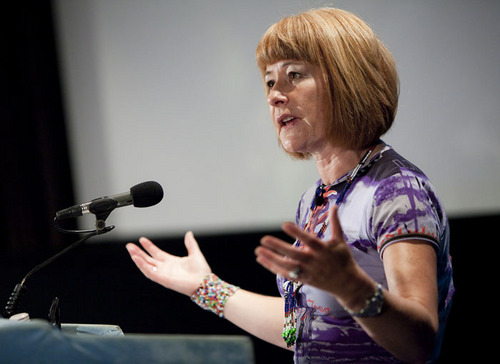
Dale Templar is the series producer of Human Planet. Her passion is wildlife and people.

Dale Templar
Every shoot on human planet was like an expedition. They had to carry around huge amounts of expensive equipment to unimaginable places.

On the show they used special slow-motion cameras, and super slow-motion cameras (like the Phantom), which meant they had to fly in a special camera operator, along with the camera.

Phantom Camera
They also used a crane to take the camera up and over areas a camera operator cannot get to. This also meant they had to carry those around too.

Camera Crane
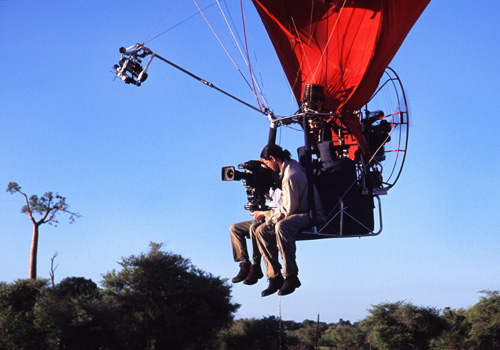
For aerial photography they used a special piece of equipment called a Cineflex. This gave them stabilisation and a long zoom. This camera had to be attached to a helicopter. When a helicopter was available, they used a piece of equipment called a Cinebulle, which essentially is a hot air balloon with a camera attached to it, and a seat for an operator.

Cinebulle
Almost every single piece of kit they took out on location broke down at some point, especially a piece of kit called a Cable Dolly. In one sequence they suspended it over a river, and you can see how much work, and safety equipment, goes into setting up and using the dolly.

Cable Dolly
Overall I found this video very interesting. I was surprised to see all the different types of technology they use to film each episode, and to learnt that they even dare to take some of this equipment into unimaginable places. Many environments can be difficult to film in, so before going on any shoot you need to think about how the environment is going to affect how you work, and how your equipment works. Preparation is key.

Video:
BAFTA Guru- Dale Templar: In Conversation (http://guru.bafta.org/dale-templar-conversation)

Images:
https://pbs.twimg.com/profile_images/2260714223/Dale_bafta_talk_CU.jpg
http://www.blogcdn.com/www.engadget.com/media/2010/04/19apr10engplflex954.jpg
http://www.aceeast.com/cam_images/Techno151.jpg
http://www.cleyet-marrel.com/site/IMG/jpg/MadagascarBaobabs06_1.jpg
http://www.adventurecamera.co.uk/images/ScottishLandscapes-cableDolly.jpg