Showing posts with label self-portrait. Show all posts

Sunday, 17 January 2016

Directions: Self-Portrait- Shot List

Once I had finished the script for my self-portrait I could create the shot list. I will use this shot list when filming to ensure I get all the coverage I need to effectively tell the story I am trying to tell. A lot of the shots may differ from how they are described in the shot list because once I've set the room up I may find a better angle to shoot from.

Here are the first 3 pages from the shot list:

Page 1
Page 2
Page 3
Even if I do change some of the shots, this shot list we be very useful during the shoot. I will now send a copy to my camera operator so they have an idea of what I'm looking for before we begin the shoot in a few weeks time.


Directions: Self-Portrait- Script

Today I wrote the script for my self-portrait. The script is pretty much just a description of what happens on screen as there is no dialogue. I've written it to ensure my self-portrait has some sort of story to it. This will also help me create my shot list.

I've decided to start the story off inside the Lego set I built because I want the Lego figure to have a story of his own. He walks into the room to discover he is inside an even bigger world, surrounded by photos and static screens.

After the camera goes around the room, looking at its contents, it is interrupted by someone coming into the room. They peg up a photo and eventually it is revealed to be me, completing my collection. The scene then ends on a static television.

I have decided to call the peice "Static".

Title Page

Page 1

Page 2
I can now use this script to create a shot list.

Directions: Self-Portrait- Final Idea & Shot tests

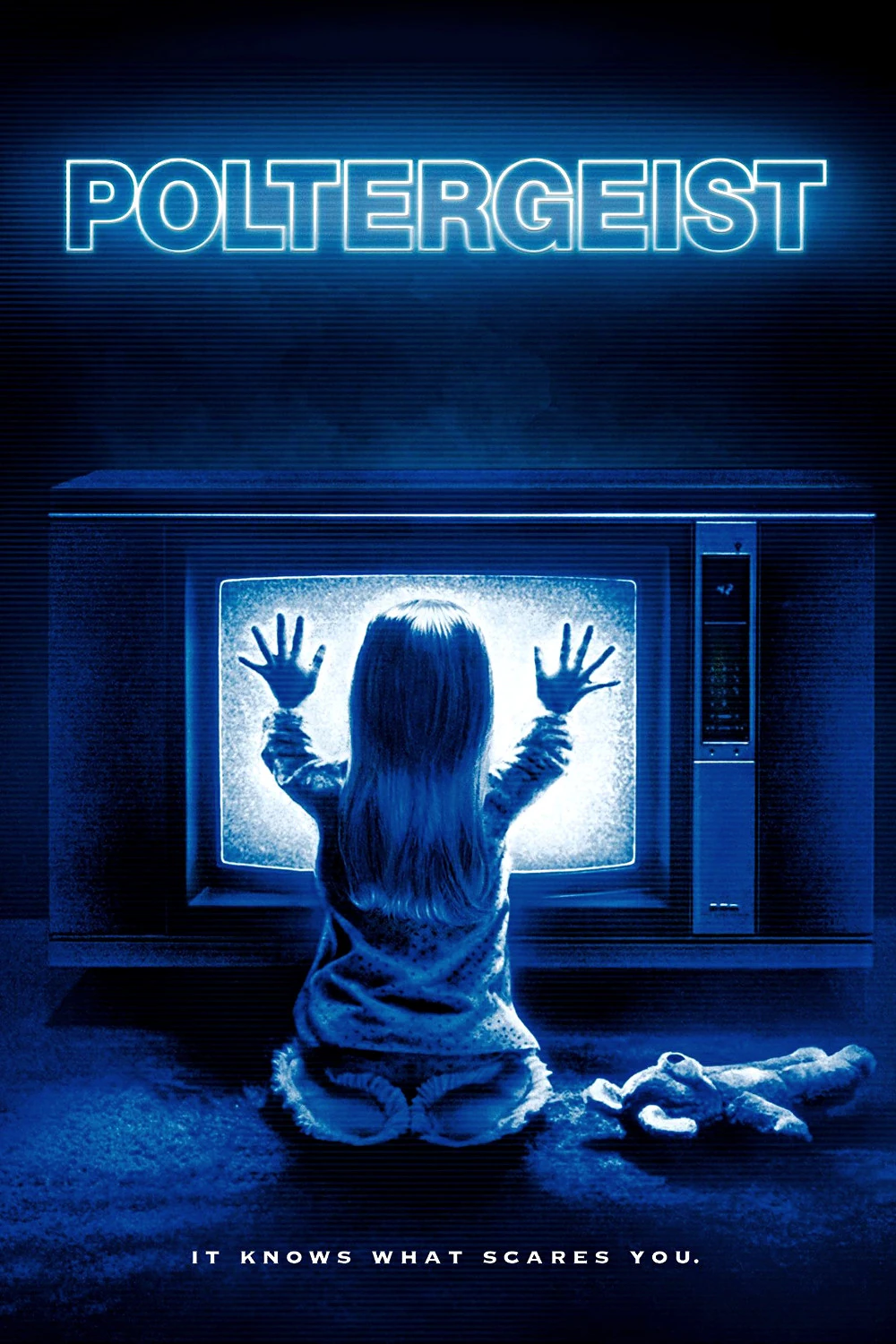
Recently I wrote about my initial ideas. Since then I have narrowed to ideas down to a final idea. I have decided that I want to base my self-portrait around static. I like to incorporate television into my projects and I think a static screen perfectly represents television. I also think static has a creepy feel to it, like you could stare at it and see something, even though there is nothing there, like in Poltergeist (1982). Static can tell a story, even though it literally it is the "nothing" that exists when there is a loss of signal. But it can show many things. Maybe it suggests that someone is lost, missing or out of touch with the world. I just find it very interesting and so I want to use it in my self-portrait.

Poltergeist (1982)
Before settling on the idea I wanted to create a few test shots to give myself an idea of how it would look and feel. I set up a few shots I had in mind:

Static TV in the corner of the room
Static on a laptop
Static screens, a light in the corner, photos pegged up & a smoky atmosphere
Close up
The photos 

I love the look that the photos give off and I think it is perfect for my self-portrait. They give you a really good idea of what I'm going for. I also feel like look quite cinematic. I filled the room with some smoke to add this extra layer and to make the light stand out. It's adds at atmosphere to the shot, which changes the feel. The photos make you wonder what might be going on. If I was to see these photos and not know what they were about, I would assume they are from a scene about someone watching or looking for someone else. They are very mysterious.

I'm glad I shot these because now I'm confident I can pull of the look I was hoping for. The atmosphere they create is perfect for my self-portrait.

Directions: Self-Portrait- Set Rebuild

Set Rebuild

A few years ago I made a Lego based short film called "The Rock Chick". I wanted to incorporate parts of that film into my self-portrait however, I want to recreate the shots, not just take footage from the original film. So to do this I needed to start by rebuilding the set that I used. Lucky for me my younger brother still has all of his Lego so rebuilding the set was easy. I rewatched the film and drew a floor plan of the small set based on what I could see. Unfortunately, I don't still have the original footage so the film was my only reference point. I spent a few hours rebuilding the set and I think I got it pretty close to the original.

Here are two shots from the film:

Shot 1
Shot 2
Here are two photos from the rebuild:


Shot 1
Shot 2
And here is a photo of the full set:

The full set
I think I got it pretty close to the original set and I think it'll look exactly the same when it's on screen. I look forward to incorporating this into my self-portrait.

Sunday, 10 January 2016

Directions: Self-Portrait- Smoke Techniques (Film Riot Research)

For my self-portrait I want my bedroom to look a little hazy. This allows the light rays to be visible and adds a bit of dimension to the film. Strangely enough, this week Film Riot brought out an episode about using haze on film. It's like they know what I'm thinking, they keep bringing episodes out about things I want to know. Here it is:


In the video they talk about two techniques that can be used whilst filming to create that hazy look and feel. From this I learnt that I could use smoke in a can (something I already own) or I could add the smoke in digitally and use camera tracking to sell the effect. I prefer to do as much in camera as possible and so I will either use the smoke in a can, or my smoke machine, to pull off this effect. I also saw them use a light and some cardboard cut outs to simulate light rays coming through a window. This is definitely a technique I will think about using in my film.

Using a light and some cardboard

Directions: Self-Portrait- Questions + Answers

When completing my research I came up with some questions I felt my self-portrait had to answer. Here are the answers and how they are answered.

What was my childhood like?

As a child I lived on a rough council estate. Nobody on that estate was the type of person that had a dream. All my neighbours were happy to just stay jobless and live off their benefits. I didn't want to end up like that and I think that is where I get my motivation from. To show this I will use images of my surrounds. Although I live somewhere different now, it will still help show how my surrounds shape me.

What made me want to work in TV/Film? Who/what were my influences?

Since I was a kid I have wanted to make films/tv. I'm not really sure where that all started out. All I know is that as a kid I would build Lego tv sets and create my own little shows. I'm sure why I did that, I just did. My influences are J.J. Abrams & Steven Spielberg. I will show these two points by using Lego in my film and sounds from my favourite films made by those directors

How did I start out?

I'm not sure when this was but my Grandad gave me an old video camera and I started using it to make little tv shows. Half the time the videos were not planned so I just filmed whatever I could come up with on the spot, which is one of the reasons why I like to use improvisation a lot in my current work. I will show this by using clips from those videos.

What kind of person am I?

I think I am a fun, humourous person to be around. I have a personality like marmite, you either love it or hate it. I like to be kind, I treat others with respect, because I expect it back. I'm not sure how I will show this.

What's my directorial style?

I like the handheld look. I tend not to use a tripod. I also like the use of close ups and a shallow depth of field. I like to tell stories using the camera, not the characters (an influence I got from watching Spielberg movies). I will show this by applying these techniques when filming my self-portrait.

What do I think it means to be a director?

I think it means that you are the vision. It is your job to translate words into images. You control the story, in terms of how you control the storytelling device-the camera. I will show this by keeping this in mind when directing my self-portrait.

What kind of TV/Films do I want to make?

In terms of TV I want to make entertainment television, mostly studio based. In terms of film, I want to make very visual stories. I will use this by carefully using visuals in my self-portrait.

Why am I interested in TV/Film?

I love to be entertained, and I feel TV & Film does this best. I'm not really a fan of reading for entertainment. I will show this by using television & screens in my video.

Where do my ideas come from?

My ideas come from my vivid imagination. I write them all down in a little book, even if it's a bad idea, because they could be developed in the future. I will show this book in my film.

What are/were my surroundings like?

Refer to the first question.

What scares me?

Failure. That's it. Adam Savage (from Mythbusters) says "Failure is always an option". Even though it's an option, it scares me. I want success in life not failure, and I'll work as hard as I can to get it. I will show this by hopefully not failing this project.

What do I think my future will be like? How will I move towards that?

Hopefully my future is good. I will just continue to work really hard and hope it pays off and gets me to where I want to be. I will show this by including some hints to what I want for the future.

And that's it, all the questions answered, now I just need to translate this into a shot list.

Directions: Self-Portrait- Mood Board

Here is a mood board to give you an idea of the style/theme my self-portrait will have:


On here I have included images of:

  • Dark rooms (photo development labs)
  • Old photos
  • Televisions & static
  • Sun rays
  • Smokey rooms
  • Super 8 camera
These all represent my idea quite well.

Directions: Self-Portrait- Ideas

When I think about what best describes me and my view of the world I think about my bedroom. Out of any room in the world, it is the only room that shows someone what kind of person I am. I believe a person's bedroom can tell you a lot. It's their own private space and they keep all their secrets locked away in there. So for my self-portrait I want to use my bedroom as the main location, because it represents me perfectly. I decide what goes in my room, I decide how it looks, I decide where things go, so that makes it my vision.

As I look around my room I see items that represent my past, things that have made their way into my life and I felt they were significant enough to get a space on my shelf. For example, by my desk I have a teddy bear. This teddy bear was the star of my first proper short film called "A Forgotten Friend". It means something to me and that's why I still have it. On my shelf I have a lego ambulance which I built and used in the first video I ever made as a child, which was a stop frame animation. Again, I have it there because it tells people something about my past. The way I position things in my room shows you the kind of life I live. Everything is neatly put in it's place. I like things to stay where they are and I know if someone moves them. So what I'm saying is my bedroom is the perfect location for my self-portrait.
The teddy bear
THE PLAN

To really tell a story I need to add more to my room. I am going to hang old photos up on strings and hang them around my room like an old photo development lab. I will use these, and effective sound design for each photo, to tell the story of my childhood. Each photo will represent a different stage in my life and how it made me who I am today. I will also hang up some blank photos so I can add clips from my first ever films. Along with this I will use the multiple screens in my room to also show clips from home videos and my first films; films that mean something to me. I will also get some shots of the items already in my room and build them into the film, again using effective sound design to give each item a story. I will appear in this film, looking at the photos and reflecting on my life, it'll be quite a fun experience. When I started making films I made stop frame animation films with Lego so I will re-build some of the sets and place them around my room and recreate scenes from the films. Finally I will also use the screens to project some images/videos of the area I live in because I feel that where I live has also played a big part in making me the person I am today.

STYLE/FRAMING

For this film I will be using my brother as the camera operator because he helped me make every single film I made as a child and he really understands my style. I will stick to the handheld look as it is one I favour. I will also use a lot of close ups and a shallow depth of field to help tell my story. Hopefully if it is a sunny day I will try and block up my window so only a few streaks of light come through. I will fill the room with a slight haze so the light streaks stand out on camera. I will use practical lights to dimly light the room up (e.g. table lamps). In terms of colour I will be using a lot of blue, however I will desaturate the footage slightly. I am attempting to mix the colour schemes from Super 8 and Jurassic Park together as they are my favourite films, whilst also mixing in the red from the lights in a photo development lab.

Hopefully if all goes ok the film will come out just as I want it too and will represent me and my style perfectly.

Colour scheme from Super 8 (http://moviesincolor.com/)
Colour Scheme from Jurassic Park (http://moviesincolor.com/)

Saturday, 9 January 2016

Directions: Self Portrait 4

This is probably the strangest video I came across whilst researching self-portraits. Here it is:


This is a self-portrait directed by Dana Nehdaran. Similar to my other research, I do not know who this person is but I did learn a bit about them from this video. The video is pretty much a timelapse of his head and beard being shaved. But there is still a story being told.

What did I like about it?

I liked how the video told a story. I think it is a story of transformation because by the end I feel he looks like a different person. The film is very abstract. It feels like the man in the video is being broken down and torn apart. His facial expression is very blank. His shirt is removed. At times the camera focuses on the mirrors behind him, to show you hair being removed from the back. At the end of the video a white sheet is placed over him like he is trying to hide his new look, and then he fades away as though he is a ghost. I also think this makes it seem as though he is breaking down. Finally if you look closely you can see that the lighting gets darker throughout the film and I also think this shows how he is falling apart or being broken down.

I think this is a very interesting piece of work. From what I can gather it tells the story of a rough time in life. Maybe the effect of a close death or a break up, or maybe, because of the head shaving, he is telling the story of a cancer patient. These are all things to think about. The film is very interesting and I think the story behind it is a matter of interpretation.

What I can take from this film is that a lack of narration and any movement at all can still be effective in telling an interesting story, something I can consider when planning my own self-portrait.

Directions: Self Portrait 3

Another self-portrait film I enjoyed watching whilst carrying out my research was this one:


This is a self-portrait about a woman called Susan O'Brien. Similar to the other self-portraits I have watched, I do not know who she is, however I have purposely watched ones about people I do not know because an effective self-portrait will tell me everything I need to know.

What did I like about it?

What I liked about this film was the use of home videos at the start and at the end. She uses footage from her childhood to help tell the story. I think this is a very interesting technique and one I considered when I began this project. The home videos give you an idea of what her childhood was like and how it lead to her becoming who she is now. She clearly liked being on camera, or liked working with the camera, so it fits into her modern day personality as a filmmaker. And at the end of the video in a home video she says "Mum can you cut?". She sounds like a director when she says this, and from this video and from the video's description, I assume that she is probably a director now. The home videos help to tell the story in a very effective manner.

Another aspect I liked is how the videos are saturated with colour. Every single shot has something colourful or interesting in it, like her hat. I think this was probably done to match her colourful personality. From the video I would assume that she is probably quite a bubbly and fun person. And I think the heavy use of colour represents this.

And finally all of the footage filmed on the streets of a city again help to tell a story. You get a sense of where she lives and where she likes to go. She climbs up to the roof of a building and watches the sunset. You get the feeling that she has been there before. She points and looks at things like she's seen them before so you can tell she probably lives within the city. You can tell she is a city girl, not a country girl.

I think the video is very effective in telling her story, and I particularly think the home videos play a big part in this. I'm definitely going to find a way to incorporate home videos and old photos into my own film because I think they are a very effective way to tell a story of my childhood and how it made me who I am today. Overall I think this video is a very good example of a self-portrait, and I learnt a lot from it about the woman.

Directions: Self Portrait 2

During my research into self-portraits I came across this video on YouTube:


It's a self-portrait by Kinshuk Surjan. I don't know who he is but I gather from his channel that he is an Indian filmmaker.

What did I like about it?

What I liked about this film was the use of sound to build onto his narration and the images on screen. For example, at one point he is talking about his childhood and how he did not ask questions. In the background, as the child on screen is being told what to do, he has added the sounds of people marching. These sounds make it seem like the child is part of a regiment of children, obeying those in power; or in this case obeying the teacher, the adults.

I also like the use of the box on the heads of the actors. I think this adds a bit of mystery to the character and when the box changes from cardboard to mirrored glass, it shows how he went from just accepting what people said about the world (made of an absorbent, blank material), to looking at and reflecting on the world himself (made of a reflective, harder material). The first point is also shown when the boy places paper into the box, like he is taken the written information in. And then when it all falls out, it shows how he changed.

Finally I like the use of his childhood to explain why he is the person he is today. He tells us about why he likes writing stories and he does this using his childhood as inspiration.

Overall I think the main thing I can draw from this is that for my own film I could use my childhood as inspiration to help me tell a story. I will work on developing this. I also think the sound design in this video works really well. Sound design is very important for my own film so I will think carefully about it.

Saturday, 2 January 2016

Directions: Self Portrait 1

As part of my research for the directions unit I have to create my own visual self-portrait. I was unsure as to what I could do so I did a quick google search and managed to find a few film related self-portraits that could help me visualise my own a little better and get a sense of what one is.

The first one I came across is this one created by Film4. It's a self-portrait on filmmaking, told by filmmakers.


In this film huge directors like Quentin Tarantino, James Cameron, Martin Scorsese, David Fincher, Ridley Scott, Christopher Nolan, and many many more, talk about the art of directing. They talk about how they got started and what it is that makes them want to make movies. They talk about what they think it means to be a director. Some talk about what it is like to make a movie and what influences them. They talk about why they're interested in filmmaking; where ideas come from; what makes them nervous and scares them; how characters and action work together; and their childhood, using Super 8 cameras to make short films.

I found this video extremely interesting. It was great to hear what these directors had to say about filmmaking. I learnt a lot from watching this video and it raised a lot of questions I feel I need to answer in my own self-portrait:

  • What was my childhood like?
  • What made me want to work in TV/Film? Who/what were my influences?
  • How did I start out?
  • What kind of person am I?
  • What's my directorial style?
  • What do I think it means to be a director?
  • What kind of TV/Films do I want to make?
  • Why am I interested in TV/Film?
  • Where do my ideas come from?
  • What are my surroundings like?
  • What scares me?
  • What do I think my future will be like? How will I move towards that?
I will continue to work on my self-portrait, using this questions as a starting point.