Showing posts with label Screenwriting. Show all posts

Sunday, 24 January 2016

Directions:Pre-Production- Script Changes & Draft 2

After reviewing my plans for this project, I have decided to make a few changes to my script:

Change 1:

I have decided to remove Gus's bodyguards from Scene 2. The reason I have done this is because I want Gus to seem more vulnerable at the start of the seen, before he works out what is going on. I feel the bodyguards remove this vulnerability, because he has protection if something does go wrong. Also when you watch the original scene you can see that the bodyguards have no purpose; they just stand in the background, not knowing what is going on. This makes me think they can be removed without affecting the tension of the scene.

Now in Scene 2 Gus will emerge with no protection, he will be on his own. He will work out what is going on by himself, and protect himself by not getting in the car.

Change 2:

After reviewing my feedback and my schedule, I have decided to change the time setting of Scene 1. Instead of it being set at night, it will now take place in the late afternoon. I think the scene can still work, no matter what the time of day is. My main reason for changing this is because of lighting. I fear I may not have been able to light the scene well at night, and this could have ruined my footage, and the entire scene. This is a risk I am not willing to take, as I would not have time for a reshoot.

The scene will now take place as the sun is going down, which means I won't have much time to shoot it. I will have to stick to a strict schedule to ensure I complete filming before it goes dark, and I believe I can do this.

Draft 2

To implement these changes I have:

  • Removed the description about the bodyguards in Scene 2 and replaced it with an alternative that relates to Gus.
  • Changed the scene heading and description for Scene 1, from a night setting to a late afternoon setting.
Draft 2: Title Page

Wednesday, 20 January 2016

Directions: Script Feedback

Recently I received feedback on the first draft of my script for 'Joshua Jones Directs Breaking Bad':

"Nicely written out script. It's very very detailed, so that will be key that you get that kind of coverage to pull out the emotion and drama of it. Sound design will be VERY important... The night scene in will be tough to film - so think how you can do this with limited light. Also, be good if you can link the scenes somehow..
Key elements:
Good casting required, confident. Plus the right ages and look.
Great locations and think about the night scene - as in how.
Sound design.
Good coverage.

This is a greenlight project"

I am very pleased with this feedback as it means I can start working on creating the film, knowing I have a good enough script to do so.

I need to think very carefully about my location choices, and I believe the ones I have chosen will work perfectly. I also need to think very carefully about my cast, and again I believe the people I am planning on choosing will work very well, and fit the physical descriptions.

My main concern is the night scene. I have considered changing it to a late afternoon scene instead, when the sun is going down. I will have limited light and time but it won't be as limiting as shooting at night. This is something I will think about.

And finally I need to think carefully about sound design as that is what creates the tension that these two scenes have.

Sunday, 17 January 2016

Directions: Self-Portrait- Script

Today I wrote the script for my self-portrait. The script is pretty much just a description of what happens on screen as there is no dialogue. I've written it to ensure my self-portrait has some sort of story to it. This will also help me create my shot list.

I've decided to start the story off inside the Lego set I built because I want the Lego figure to have a story of his own. He walks into the room to discover he is inside an even bigger world, surrounded by photos and static screens.

After the camera goes around the room, looking at its contents, it is interrupted by someone coming into the room. They peg up a photo and eventually it is revealed to be me, completing my collection. The scene then ends on a static television.

I have decided to call the peice "Static".

Title Page

Page 1

Page 2
I can now use this script to create a shot list.

Saturday, 2 January 2016

Directions: The Script

Now I have chosen my scenes, I had to translate them into a script that I could work with through-out the production. So I opened up Final Draft and got the scenes up and Netflix. I then watched the scene back, pausing after every action and piece of dialogue so I could write it down in script form. I then went back through and filled out any other descriptions and fine details to ensure my version of the scenes played out the way the original writers wanted it to.

The first scene, from the S4E2, had only one line of dialogue. The entire two minute sequence is pretty much just action. So when it came to writing the script I ensured I kept it as detailed as possible so all the actions would come across the same way on screen as they did in the original show. For the second scene, from S4E12, I had a little bit more dialogue to work with, however actions were still very important. In the scene only one character has all the dialogue so I ensured that was all correct and fitted into the script nicely. I then detailed the actions to again ensure they came across right. This scene had a lot of action in the space of only three minutes and I had to move it too a different location whilst still keeping that action, which I think I did well. In script form it was difficult to express how tense the scene was supposed to be. The music is what makes it extremely tense, however the actions really add to this so I had to ensure they were scripted correctly. Finally, I fine tuned my descriptions so everyone on the cast and crew could read my script and get an idea of what I am going for.

As this is not a screenwriting exercise I tried not to focus on the script too much, however I did want to make sure it was right before I went ahead. I think my adaptation of it on paper represents the scenes quite well.

Here are some of the pages from the script:

Page 1
Page 2 
Page 3

Friday, 27 November 2015

What I've Learnt About Screenwriting

Over a series of lectures with Simon and Steve I learnt about the Art of Screenwriting. Below I have summarise what I learnt:

  • Every script begins with an idea. This process is all about brainstorming.
  • Every story has a beginning, middle and end.
  • The key ingredients are:
    • Character- All stories are about people. They give it meaning.
    • A goal (we need a good reason for the ending)- They need something to aim for. Something to solve, get, find.
    • Conflict- The protagonist needs something to face or overcome. Conflict creates drama.
    • Change- A change of affairs. The 'world' we are in needs to be different by the end. This is the most significant part of the story.
  • Pre-writing is important. 65% of writing is pre-writing. 5% is actual writing. 30% is re-writing.
  • You need to note down every idea you have.
  • Test the ideas. Which gives the strongest reaction.
  • Think about who, what, when, why, how?
  • Story: A series of events that form the screenplay.
  • Plot: Most interesting and dramatically effective way of telling the story.
  • Theme: What the story is really about, 'the idea'. Gives the script emotion.
  • Protagonist: Character we want the audience to focus on. They will go on a journey, they will change.
  • Main/secondary characters: People who interact with protagonist and have an affect on the outcome.
  • Minor characters: Add detail/atmosphere or comic relief.
  • You need to filter the ideas, build the story, research the story, build the characters and then build the world.
  • Moments are essential.
  • You can't say it, you have to show it. Use action, behaviour and drama.
  • People do not just open up about their emotions. You're characters shouldn't either.
  • Know what you hate and never write it.
  • Think carefully about timescale.
  • Think about voice overs and flashbacks.
  • Does it start at the beginning, middle or end.
  • Avoid explanation, you need to allow the audience to work it out.
  • Start with the pitch. Short and catchy.
  • Treatment- layout of show, characters, first episode review, series overview.
  • Bible: lots of info about the characters, show and series.
  • First draft (waiting for the green light)
  • Then start writing the rest of the series.
  • Know the ending before you start.
  • Think about whose POV it is.
  • Kick off with an event that gets it going.
  • Character:
    • Get to know you characters.
    • They need to have flaws.
    • Remember that actions have consequences.
    • Characters have traits.
    • Types:
      • Monster- Conflicted. Conflicted with others.
      • Existential hero/heroin- They don't know who they are. They think life will be better if they do know.
      • The Woman- Choices, they have big ones to make. They're very picky.
    • Moments make up characters.
    • There is an existential hero in all of us.
  • Dialogue:
    • Don't have pointless dialogue.
    • Get to the point.
    • Not too on the nose or too discreet.
    • Don't be too formal.
    • Don't say names too often.
    • We all speak using different rhythms.
    • Not too real. Not too dramatic.
  • Screenplay layout:
    • Present tense.
    • Title page, scene headings, action, characters, dialogue, layout.
    • Use INT/EXT or I/E for scene headings. Write if it is day or night.
    • Brief descriptions of locations.
    • New scene = change of time or location.
    • Action goes under scene headings.
    • Character names in capitals.
    • CAPITALS for dramatic sounds/words.
    • Use (V/O) for voice overs or (OS) for off screen dialogue.
    • Try to create artificial cliffhangers to make the reader turn the page.
  • Irony is very useful.
  • Four kinds: Tragic irony, situational irony, comic irony & dramatic irony.
  • Think about a Catch 22 (situations you can't get out of) and Sophie's Choice (tough decisions).
  • Motivation is important.

Story-Telling: Project Evaluation

Pre-Production and The Writing Process

I began this project with a small idea of what kind of story I wanted to make. I knew I wanted to set my film inside a hospital and so I need to come up with and idea to fit this location. After some lectures about story-telling I began writing down a few ideas (Ideas Blog) and eventually the idea I came up with was about a young man who has done something wrong and so has been banned from seeing the birth of his son. See this blog post to find out more about the idea: Story-Telling: The Pitch. I was very happy with this idea and happy with the feedback I received about it. Before I could continue developing the idea I had to do some research about hospitals and the maternity ward in particular. After completing this research I decided to make a few changes to my idea which can be seen here: Idea Changes

Next I began thinking about my characters. I decided that Dylan, the main character, would be a young man (20-25) who had done something wrong. I decided that he would wear dark clothing, to represent the emotions that he is feeling. Dylan repeats himself a lot and hates it when people tell him what to do. He never takes responsibility for his own actions. For Rachael I decided that she would be a young woman (18-20) who is disappointed with Dylan and on the side of the fiancée. She would wear light colours, so show how she contrasts with Dylan. She always speaks her mind, however sometimes it can make a situation worse.

Next I began working on the first draft of my script. I started by writing all the scenes I had already thought the most about, these were my moments. I then added other scenes in around those. This was the first draft, it was awful as you would expect a first draft to be. Most of the dialogue didn't make sense and it was a bit too tell not show. For the second draft I went back through the script and took out the bits I didn't like anymore. I either then replaced them with something better or used the free space to improve a different and more important scene. I worked on all the dialogue and tried to make it as minimal as possible. I also worked on some of my location descriptions at the start of each scene and I worked on the character descriptions too.

Next I made a few more changes to form my third draft and after a feedback session with my tutor, I made more changes that then formed my fourth draft. Before writing my fifth draft I had a feedback session with Steve Combes, a professional screenwriter. Steven and I went through the script together and picked it apart, deciding what worked well and what could be changed. Steve made some suggestions about the opening scene. He said I could give the van a reason to be there so the accident isn't just a coincidence. Next we moved onto the main character, Dylan. Steve thought it would be good to think about his back story and what it is he might have done to annoy his fiancée. We both decided that Dylan was a gambler. Finally we looked at the structure of the script and how I could break the story up a little. Steve suggested that I split my first waiting room scene into two separate waiting room scenes. Overall I loved the feedback I got from Steve and I'm glad he liked my script, he said it had a lot of potential. I made most of the changes he suggested and produced draft five of my script. This draft is the one I used during my shoot.

Now that my shooting script was ready, I needed to start working on my pre-production. I started by thinking about the locations I could use. I though about using The Maidstone Studios because I felt it looked like a hospital and that with a little bit of work I could turn one of our base rooms into a waiting room. I also though about using a local park, Vinters Park, as the location for my opening scene. Once I had decided on these locations I went about getting permission to use them. I filled out risk assessments for both locations and handed them to the right people. The Studios gave me permission to use one of their carparks and the University gave me permission to use one of their lecture rooms. For these risk assessments I had to literally think of everything. The risk assessments can be found in this blog.

Once I had got my locations I had to think about sorting out a cast and crew. I asked fellow students if they could help me out and eventually I had a cast and crew. Next I worked on creating a call sheet and schedule for my cast and crew. I wanted these to be very detailed so every knew everything they needed to know. The schedule and call sheet can be found here. Once these were complete I emailed them to my cast and crew. I also emailed them an edited copy of the shooting script so they could have a read through before we began shooting.

Next as part of my pre-production work I wanted to test out an effect I had would have to pull off for an essential part of my script to work. I needed to see whether I had the ability to fake someone being hit by a van. I went out a shot the footage in the same way I was planning to for the final shoot and then edited it together. Here is the result of that test and the process I went through to create it: Crash Test.

And finally, I created a set of shot lists for my camera operator to help him understand how I wanted the film to be composed. These detailed the scene, shot number, description, framing specs, takes, and additional notes.

Now my pre-production was complete, it was time to start shooting.

Production

Day 1: I had arranged for my crew to meet me at The Maidstone Studios. Once everyone arrived I went to see Fergus, our technician, to pick up my booked camera equipment. Unfortunately my equipment was not available straight away and meant I had to wait around until it was available. Instead of sitting around doing nothing, my crew and I set up our location. Once this was done I called my actress in and we rehearsed the scenes we were going to shoot.
Once our equipment was available we began by shooting scene 3 and then we shot scene 4, which was meant to be set later on in the day. After we had done all this we had a lunch break. After lunch I booked out the camera track and set it up in the waiting room. We then re-shot parts of both scenes, mostly the walking parts, using the track to get some nice filler and establishing shots. Finally we used the track to shoot a time-lapse sequence that is going to be used to show the time passing between scenes 3 and 4. Once all this was complete we packed up and reset the room. The shoot went really well. Even though we had a couple of set backs, we managed to finish on time and I managed to get all the shots I needed. My crew and cast were amazing and very cooperative. I think I directed everyone very well, and even though I wasn't behind the camera I think I managed to get the exact shots I had in mind, and I think this was down to my detailed shot lists.

Day 2: On this day I had to film a big scene involving my main character: the accident scene. The scene had to be shot in a specific way for it to work and so it was a very nerve racking day for me. However, before we could begin shooting that scene, we needed to re-shoot some things from day one. We set up part of the waiting room again, set up the equipment and began shooting. I ensured everything was the same to avoid any continuity issues. Once this filming was complete, we reset the room, packed the equipment up and took a short break. After our break we headed to a next location which was a park that ran around the back of the studios. Once there we set up and began shooting scene 1. I was pleased to see that we finished ahead of schedule, which meant we would have more time to shoot scene 2 which was the crucial van accident scene. After lunch we headed out to the car park. First I looked around at the space we had been given and blocked out the scene, deciding were the crucial moment would take place. We then shot the scene, which involved a lot of running, all the way up to the moment before the accident. Then we took a break whilst I set up for the camera for the final shot. Finally, we shot the accident and then we were done, ahead of schedule.

A more detailed look at these two days can be found here (day 1) and here (day 2).

Post-Production

Now I have completed my filming, I can being working on the post-production.

Before doing anything, I imported my footage into Premiere Pro. I then sorted through the footage and separated it using bins. Once I had organised everything, I began working on a radio edit. That meant that I was only going to focus on getting all the audio in the correct order, insuring all the lines spoken followed the layout of the script. To do this I went through each piece of footage, choosing the shots with the best audio and then placing it into the timeline. Next I used the edit tools to go through the clips and match all the audio up. Once I had a smooth sounding radio edit I used the same tools to go through the footage and match it up, layering some shots over audio from other shots to make the cuts seem less obvious.

Next I moved onto the shots that required some visual effects work. For this project there was only one shot that required some VFX work. In this shot my main character is struck by a van as he runs out into the road. To pull off this shot I had to ensure I shot it in a specific way. Unfortunately, when it came to editing the shot together I realised I had to shot it correctly. My blank slate (a shot of just the background, no actor) was different from all of my other shots. I thought I had locked off the camera but it must have moved between takes. Because of this I had to think of a way to work around it and still pull the shot off. I took an image of a van from a stock photo website. I opened it in After Effects. In this composition I animated the wheels so they would spin around and then stop as though the van was braking. I also slightly animated the van so it would move a little when it stopped, like a real vehicle would recoil if I were to suddenly brake. I then added some motion blur and finally I saved it.

Next I opened up my original shot, without any VFX, in After Effects. I added the van composition to the shot. I then added some motion to the van so it would move onto screen and then hit my actor at the correct moment. Next I had to crop my actor so his leg would pass in front of the van like it was hitting him. Finally I added some motion blur and that was the shot finished. I added in a 3D camera. I then used a special After Effects code [wiggle(1,50)] that adds a handheld style look by adding a random movement to the 3D camera. Once this was complete, I added a camera zoom a few frames before my character was hit by the van and then the shot was complete.

Now all of my footage was fine tuned, it was time to add all my sound effects and music, adjust the sound levels and mix it all together. I also needed to add my titles. I used the YouTube Audio Library for all my SFX and music. I added a braking sound effect, horn sound effect and engine sound effect to the van accident scene. I also added ambience sound effects throughout the scenes set inside the waiting room and I added some ambience sounds during the opening scene in the park. Next, I added my titles to the opening scene and the other titles needed between scenes to help establish which parts were flashbacks and which were not.

These edits formed the rough cut. A more detailed version of my post-production process can be found here. Some of the changes I made to form my fine cut can be found here.

Overall I am happy with the feedback I received for the rough and fine cut. All the changes suggested to me by my tutor have heavily improved the final cut of my film.

Overall Evaluation: Critical Reflections
  • Strengths-
    • My organisations skills made preparing for my shoot very easy. I was able to produce detailed call sheets and schedules that ensure my cast and crew knew everything they needed to know before any filming began. I ensured that my locations were booked a least a week before I planned to film, this meant I had time to complete the necessary risk assessments.
    • My overall production skills were good. I ensured every knew what they were doing. I rehearsed the scenes with the actors before shooting anything to ensure they knew how I wanted them to act the scene out. I stayed in contact with my DOP at all times to ensure that he knew how I wanted each scene to be shot. I also allowed him to have some creative input as I believe that having input from others, who may see your story from a different perspective, can be really useful.
    • My editing skills came in handy, especially when I had to add some very specific VFX to some of my shots. I think the final film is cut very tightly and visually I think it is very nice. When it came to colour correction I desaturated a lot of the footage and tone down the brightness and contrast because of the connotation the lack of colour has with the mood that Dylan would be feeling, and the overall mood of the story. Another use of colour in this film is that of Dylan's clothing. He is wearing red and black, which are the colours of gambling. This hints at the fact that he has a gambling problem hence why he is in this predicament.
    • Sound is a strong point of mine. I ensured that the boom operator knew the kind of sound I was looking for. I made sure he was always picking up good sound whilst we were filming, so I wouldn't have any major issues during the post-production process. When it came to editing, I used a lot of sound effects and ambiences to really sell the story. I then did a lot of sound mixing to help blend all the sounds together. I think the sound of this film came out really well in the end.
    • I think my directing skills were good. Everyone knew what they were doing and knew what kind of plans I had for the story. The DOP knew exactly how I wanted to shoot the film and as a result of this all of my final shots came out exactly as I had imagined. My actress knew exactly how I wanted her to say the lines and what body language she needed to use. As a result of this, her sides of the story were perfect, it's just a shame my acting let my side of the story down.
  • Weaknesses
    • I think in some way my editing skills let me down a little as well. Although I was able to cut together a tight edit, I wasn't able to fix my issues with the television screens in my waiting room. I tried my best to replace the screens but I just couldn't pull it off. I think if I had more time I could have learnt how to complete it properly.
    • My acting skills (of which I have none it would seem) let me down. My actress was brilliant and really sold the story. However I feel that every time I said a line I completely ruined the atmosphere. I also did not run fast enough during the opening scene which made editing together a fast paced running sequence quite difficult.
    • I think my scriptwriting skills ruined my idea. At first I thought the idea was great, and I still do, however I feel that the script I wrote destroyed any hopes of it being great. I feel that the final product is a little boring. And if you find your own work boring, it isn't a good thing. This is definitely down to the bland script that I produced.
    • I should have checked through all the settings on the camera before I began shooting. I didn't see that the gain levels were set to their highest point and therefore I ended up with very grainy footage. I was disappointed with this but I was able to reduce the amount of grain with a bit of colour correction.
    • I think I could have spent more time completing research during my pre-production phase. I had an idea of what a hospital waiting room would be like but I still don't think I accurately portrayed it. With a bit more research I think it could have been more accurately portrayed.
  • Possible developments- What did I learn?
    • I would think about how I would replace the tv screens before production began. This would have meant I could have put a green screen on the tv and then added some tracking markers to make post-production tracking and cropping a lot easier. A few people did suggest this to me prior to filming and I now wish I had listened to them.
    • I would complete more research on the hospital environment, gambling, and young couples. This would have made certain aspects of the story a bit more believable. It would have also helped me with my descriptions in the script. And I would have been able to write better dialogue, knowing a little bit more about how someone in Dylan's situation would say and how someone like Rachel would respond.
    • I would ask for advice from professionals, like Steve, because I feel my final script was not as good as it could have been. My script let my story down, it had so much more potential.
    • I would think of something I can add into the film to make the second half a little more interesting. I personally found it a little boring, which is not good.
    • I would ensure I checked all the necessary settings on the camera before I shot anything to avoid getting really grainy footage again.
    • I will NOT be acting in my own film again. I completely ruined the atmosphere that the film was supposed to have. I should have listened to my tutor when he suggested that it wouldn't be a good idea.
Overall I am happy with the final product. I think it has been cut together really well. I was able to pull of the van accident using VFX and my sound and visuals came out really well. It's just a shame that my acting and scriptwriting made for a bit of a boring story. The film itself looks good, I think the colour correction process I went through was a good choice and it matches the atmosphere the film is supposed to have. If I were to do this again there are a few things I would do differently, the main one being that I would not have been in it myself. To summarise, visually and sound wise it is good; script wise I think it could have been a lot better. But, to end on a positive, I am very pleased and proud of the work I have produced. I look forward to everyones feedback.

Sunday, 22 November 2015

Story-Telling: Vince Gilligan

Creator of Breaking Bad. Enough said. And that's why I want to look at Vince Gilligan.

Who is Vince Gilligan?

Vince Gilligan is an American writer, director and producer. He is know by most as the creator and head writer of the hit US television series Breaking Bad. He is also the executive producer of the spin off series Better Call Saul and was the producer of The X-Files. Similar to the other writer I looked at, Quentin Tarantino, Vince has a way with words, everything he writes means something, he never wastes a word. Breaking Bad has some of the most memorable scenes in television history and was a huge success around the world (although it wasn't at first), and every single moment came from the pen of Vince and his incredible writing team.

Why did I pick Vince Gilligan?

I chose to look at Vince Gilligan because Breaking Bad is one of my favourite shows of all time and I wanted to find out more about the mastermind behind it. I love the style that the show and his writing had, it's unique to him. During the time that Breaking Bad was on it produced some incredible scenes and incredible characters (the best being the villains).

Walter White is a great character, a hero that becomes, in a way, a villain. Vince himself once said "Television is historically good at keeping its characters in a self-imposed stasis so that shows can go on for years or even decades. When I realised this, the logical next step was to think, how can I do a show in which the fundamental drive is toward change?"[1]. Walter had some amazing dialogue throughout the run of the show and his character quickly became a sinister villain. And even though Walter was a villain, audiences across the world still loved him and routed for him all the time. Breaking Bad was an incredible success and that's why I chose to look at Vince Gilligan when writing my own script. His style influenced some of my dialogue in terms of how my main character, Dylan, seems like a bit of a bad guy yet I still want the audience to route for him. Vince Gilligan is an incredible writer and I can't wait to see what he comes up with next!

[1] Chuck Klosterman. (2011). Bad Decisions. Available: http://grantland.com/features/bad-decisions/. Last accessed 22nd Nov 2015.

Story-Telling: Quentin Tarantino

Nobody writes a script like Quentin Tarantino, and that's a fact. So when it came to researching a screenwriter I knew I had to look at him. Every word he writes has meaning.

Who is Quentin Tarantino? (as if you don't know)

Quentin Tarantino
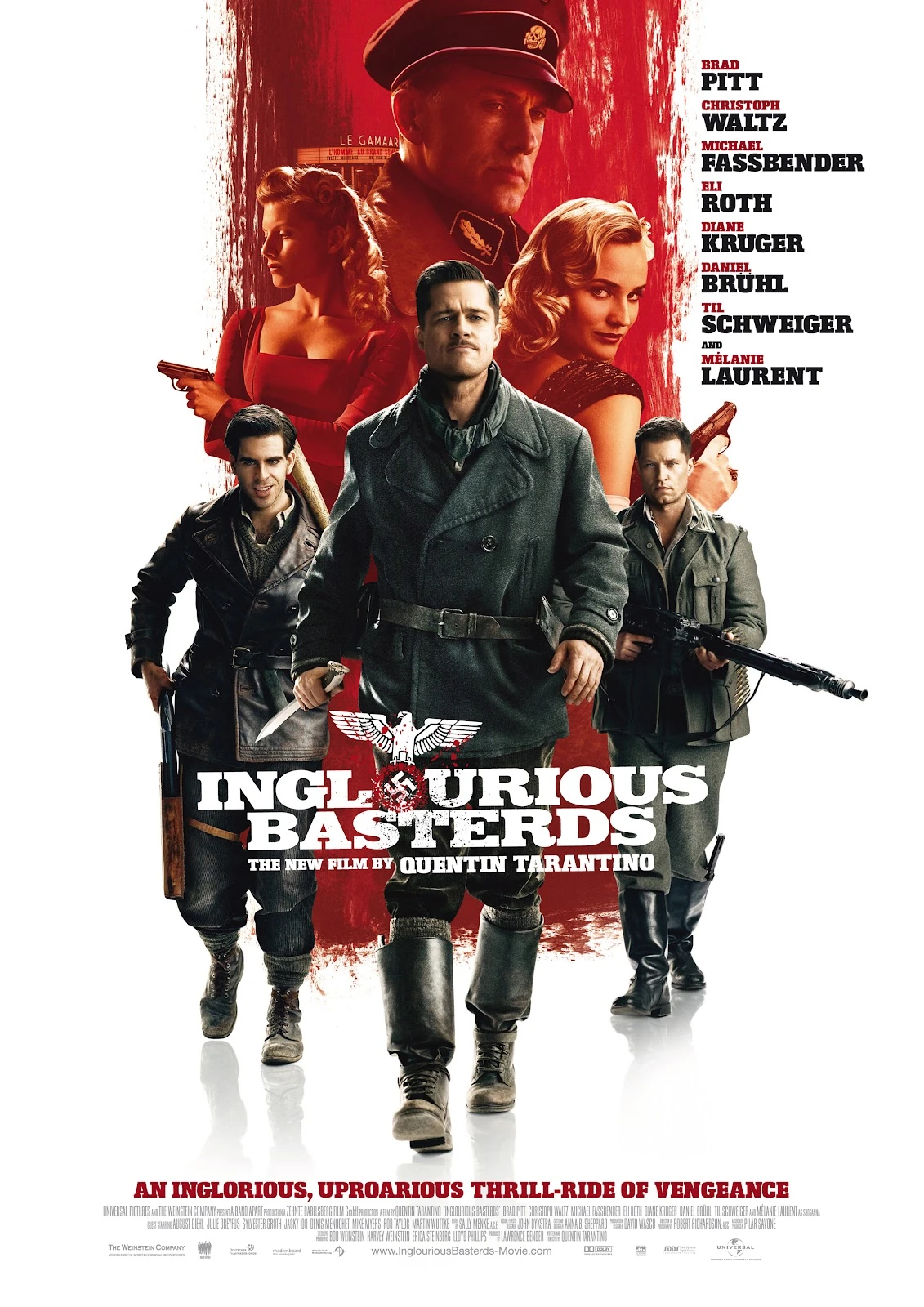
Quentin Tarantino is an American screenwriter, director, producer and occasionally actor (mostly as a cameo in his own movies). He is best known for producing films like Reservoir Dogs (1992), Pulp Fiction (1994), Kill Bill (2003/2004) and Inglourious Basterds (2009). His writing style is very individual, you know when you're reading a Tarantino screenplay. He is known for writing in a non-linear fashion and his stories tend to be of a violent and satirical matter. Tarantino has made a name for himself in Hollywood and his films have a specific and recognisable feel and look to them. He has gained both critical and commercial success over the years, winning many awards including two Oscars, two BAFTAs and two Golden Globes, as well as being named one of the 100 most influential people in the world by Time Magazine. Overall he is a brilliant man.

Why did I choose Tarantino?

I chose to look at Quentin Tarantino because I have always been a fan of his writing style and films. I loved that he can make every single word count, if it doesn't need to be said, he won't write it. His films have a lot of dialogue but each word means something. 

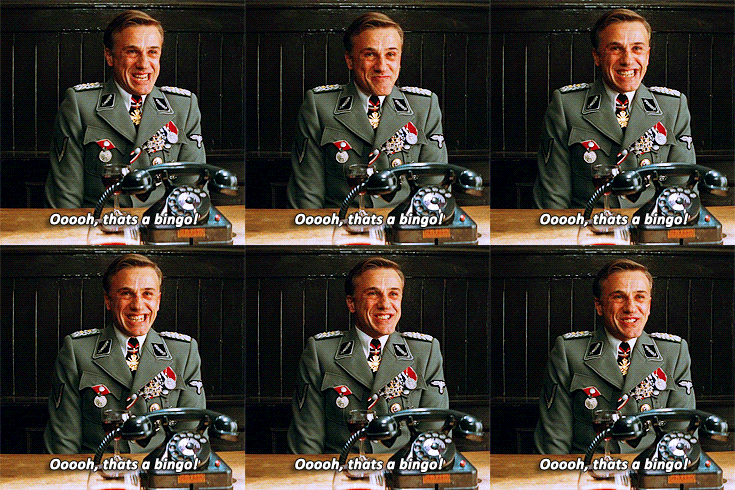
One of my favourite characters of his is Colonel Hans Landa played by Christoph Waltz in Inglourious Basterds. This character has some amazing and sinister dialogue, and Christoph's inspiring acting brings that dialogue to life. Some of his scenes go on for over 10-15 minutes and yet you are hooked the whole time because the dialogue is incredible. The man (Tarantino) has a way with words. The two scenes in the film that have some of Landa's best dialogue in them are the opening scene set in a French farmers kitchen and a scene in the second act set inside a French pub where a meeting takes place between Landa and Aldo Raine (played by Brad Pitt).

The script for the film had been in development for almost a decade before it finally went into production. Tarantino describes his process of writing: "I just come up with what I feel is a neat idea for something, and I'll put in mind. And I'll let it incubate for years. When I want to write, I figure out what genre and what style I want to work in. And then I just kind of flip through the old backlog to see which idea's time has come".

Whilst writing my own script I used the screenplay for Inglourious Basterds as a reference piece as to how a professional, and in this case a unique one, would write. I found it very useful to look at someone else's work. Tarantino is an amazing screenwriter and director and that's why I chose to look at him whilst working on my own script for this story-telling unit.

Wednesday, 18 November 2015

Story-Telling: Script Feedback with Steve Combs & Draft 5

Recently I was able to sit down with Steve Combs, a professional script writer, and receive some feedback on my script.

Steven and I went through the script together and picked it apart, deciding what worked well and what could be changed. We started with the opening scene. Steve made some suggestions. He said I could give the van a reason to be there so the accident isn't just a coincidence. He said that maybe the van driver could be another expectant father who is rushing into the hospital, looking for somewhere to park.

Next we moved onto the main character, Dylan. Steve thought it would be good to think about his back story and what it is he might have done to annoy his fiancée. We both decided that Dylan was a gambler who had gambled all his and his fiancée's money away to buy the most expensive baby gadgets available. Unfortunately, it didn't work out how he thought it would and now he is broke. I thought about how I could write this into the script and we both agreed that Dylan could receive a text or call about betting at some point during the story.

Finally we looked at the structure of the script and how I could break the story up a little. Steve suggested that I split my first waiting room scene into two separate waiting room scenes. This is to help spread the story out a little. Steve also made some suggestions about the ending of my script and how I could use the accident more effectively.

Overall I loved the feedback I got from Steve and I'm glad he liked my script, he said it had a lot of potential. I made most of the changes he suggested and produced draft five of my script. This draft is the one I used during my shoot.

Draft 5 Title Page

Story-Telling: Thrid & Fourth Draft

After reviewing my second draft I have decided to make some more edits and move onto my third and fourth drafts. For these drafts I have made a few minor changes. I have rewritten my opening scene and changed some of my characters dialogue. Finally I re-wrote my final sequence. Overall most of the changes were made because I wanted to use my car accident more throughout the whole script.

Soon I will have a script feedback session with Steve Combs, who is a professional script writer. After this session I will be able to start writing my fifth draft.

Draft 3 Title Page

Sunday, 25 October 2015

Story-Telling: First & Second Draft

Now that I had finalised all the main points and moments for my idea, I began writing the script. I started by writing all the scenes I had already thought the most about, these were my moments. I then added other scenes in around those and hoped it made up 10 pages. Lucky for me it did. This was the first draft, it was awful as you would expect a first draft to be. Most of the dialogue didn't make sense and it was a bit to tell not show.

For the second draft I went back through the script and took out the bits I didn't like anymore. I either then replaced them with something better or used the free space to improve a different and more important scene. I worked on all the dialogue and tried to make it as minimal as possible. I tried to make everything make sense and make it a bit less of a telling script and more of a showing script. I also worked on some of my location descriptions at the start of each scene and I worked on the character descriptions too.

I then looked back over it and found more things to change. Onto the next draft!...

Sunday, 18 October 2015

Story-Telling: Idea Changes

Before starting on the writing process I wanted to change a few elements of my idea and the overall flow of the story.

The changes I have made involve the opening sequence. I decided that it needed to be a moment that people would remember and a moment that kicked the story off. The initial idea involved the main character, Dylan, rushing across the hospital grounds and into the hospital. I have decided to change this and add a bit of irony and drama to the scene. Just outside the hospital entrance Dylan is now going to be hit by a vehicle (maybe an ambulance). Then the story is going to go back to a period 5 minutes earlier when he was in the waiting room with his sister. This is where the actual meeting will begin. Dylan will then leave in anger and head away from the hospital. He will then receive a phone call about his fiancée being in the final stages of her birth. He then rushes back to the hospital, where he is hit. The film then continues from after the incident as he struggles to walk into the hospital. He makes he way to the delivery room, still in pain, because he doesn't want to miss the birth. The story ends with him walking into the delivery room where the sounds of a baby crying can be heard, a sign that the baby has been born.

I have made these changes to the story because I wanted to add a moment people will remember and add more action to help cut down on the amount dialogue needed to progress the story. I also wanted to make it even harder for Dylan to make it to the birth of his son. I felt he needed more of a challenge.

I hope these changes improve the story and help me write a better story.

Story-Telling: Research for my Story

Because my entire story is based in and around a hospital and about young parents I thought it best I do some background research before I began writing the script.

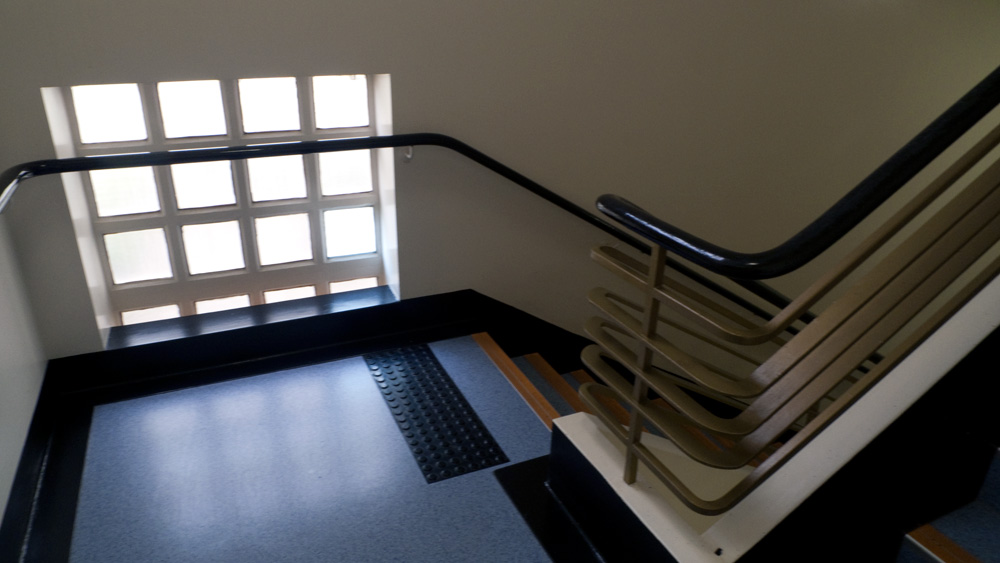
I began by doing some research on the hospital environment itself. I looked into what a hospital sounds and feels like. I even visited my local hospital. I need to recreate this feeling on screen and in the way I describe the locations in the script. I found that hospitals have a very clean feeling and tend to be quiet in most areas. The corridors some areas are busy, but others are not. The stair wells, something I want to use, are clean and echoey. I looked at how the delivery wards feel. There is still a quiet element but the sounds of women giving birth do tend to fill the area. The waiting room has a tense atmosphere with people nervously waiting to meet newborns. Nurses and midwives roam the corridors moving between rooms, checking on the expectant parents.

To find out more about the delivery room I watched a few episodes of a show called One Born Every Minute on Channel 4. In this show they have placed cameras all around a hospital delivery ward to capture the incredible things that go on. In the show you get to see the full process that takes place on the ward. This starts with the soon to be parents arriving and ends with them leaving, hopefully with a newborn, however sometimes this is not the case. Miscarriage is a heavy topic and something some of my family members have been through. I have decided not to include this in my story. The show deals with these real stories in a manner which still lets the audience see pretty much everything, even the birth. We get to see the challenges these parents face and we get to see how the fathers deal with it, something that relates heavily to my own story. Watching the show has really helped me think about how my character would react to the birth of his son and how both parents would be feeling on the day of the birth. It's a huge mix of emotions that I have to get across in the way I write the script and the way my actors say the lines.

My research into the hospital environment has really helped me think about where I could shoot the story and how I could describe the environment in my script. This research was essential and I'm glad I have carried it out.

Hear are some photos of the kind of environment I'm aiming for:
Hospital corridor

Hospital Stairwell
Hospital Waiting Room

Entrance to a delivery ward

Tuesday, 13 October 2015

Story-Telling: Screenwriting using Final Draft

In the industry professional screenwriters use a piece of software called Final Draft to write their scripts. As part of our course we spent some time learning how to use this software. We first spent some time with Simon who showed us how to format certain aspects (of which Final Draft does a lot of for you) of the script. Next we were given a task:

  • Write a 3 page script about a journey using our ride to Uni each morning as inspiration.
For this task with worked in pairs and I partnered with Ida. We first spent some time thinking of an idea and mind mapping some possible "moments". After writing a few things down we came up with what we thought was a good idea:

  • The Wonderful, Incredible, Amazing, Spectacular, Supernatural, Awesome Journey To Uni: Josh and Ida are running late on the train and as a result of this they miss their bus. Luckily the Gummy Bear Pilot and his Candy Helicopter come to the rescue. However, the pilot turns out to be a ghost and the helicopter begins to plummet. There is only one marshmallow parachute left, who will survive?...
The idea was very odd but creative and the dialogue was a mix of awful jokes and silly humour. It was very fun to write and I had a great time working with Ida. We worked very well together and our good senses of humour helped us keep it entertaining. We spent most of the time laughing at how bad our jokes were!

I found Final Draft really easy to use and I think it's a brilliant piece of software, I can see why all screenwriters use it. I think our final script was really good and I loved the dialogue we came up with. At first I really didn't think we could fill 3 pages but in the end I think we could have written even more.

Once we finished the script we handed it to Simon who read it and then wrote some feedback on it. He said he liked the dialogue but thought that we needed to write more about what the audience sees and more about the characters themselves. Looking back on it now I have to say I agree, our script did need some more descriptions of locations and how certain objects, like the Candy Helicopter, appeared on screen. I think we focused on the dialogue so much that we forgot about expanding on the actions.

Overall it was a great task and I enjoyed working with Ida. I look forward to writing my full 10 page script.

Here are the final marked pages of our script:


TITLE PAGE

PAGE 1

PAGE 2

PAGE 3


Tuesday, 29 September 2015

Story-Telling: Moment in Film/TV

As part of a screenwriting workshop we were asked to pick a moment in film or TV that we like. I have chosen:
The Tenth Doctor Regenerates- David Tennant to Matt Smith


I love this moment from the Christmas episode of Doctor Who Season 4 entitled "The End of Time". This was David Tennant's final episode. This scene is a very memorable moment because just before  the regeneration begins David says "I don't wanna go", a line which reflects David's true feelings. After serving as the Doctor for a long period time, it is clear he doesn't want to leave. This line was recorded four times with three different levels of emotion and the take used is take number 3.

Here are the alternate takes:
The line itself was almost cut because it seemed too cheesy and not like something the doctor would say. However, I think the line works perfectly and really connects with the audience because they didn't want him to go either. It's a great moment in television that almost didn't make the final cut.