Tuesday, 29 September 2015

Story-Telling: Moment in Film/TV

As part of a screenwriting workshop we were asked to pick a moment in film or TV that we like. I have chosen:
The Tenth Doctor Regenerates- David Tennant to Matt Smith


I love this moment from the Christmas episode of Doctor Who Season 4 entitled "The End of Time". This was David Tennant's final episode. This scene is a very memorable moment because just before  the regeneration begins David says "I don't wanna go", a line which reflects David's true feelings. After serving as the Doctor for a long period time, it is clear he doesn't want to leave. This line was recorded four times with three different levels of emotion and the take used is take number 3.

Here are the alternate takes:
The line itself was almost cut because it seemed too cheesy and not like something the doctor would say. However, I think the line works perfectly and really connects with the audience because they didn't want him to go either. It's a great moment in television that almost didn't make the final cut.


Story-Telling: Final Idea Testing

After filtering through my initial ideas and testing each one to see if it would work and to see if I could answer the recommended questions (who, what, why, when & how), I have come to a conclusion.

This is the idea I have decided to continue developing:

A story set in the waiting room of the maternity ward at a hospital, based around a father who doesn't have a great relationship with the mother, a relationship that can all change when they meet their child for the first time. I want the father to have a conversation with a friend in the waiting room about what happened between him and the mother. I want to use the baby as a tool to bring the two young parents together again.

I started developing the idea and this is what I produced:

Brainstorm for final idea
I will now continue to work on this idea and come up with a 25 word pitch.

Sunday, 27 September 2015

Story-Telling: Memeto

During a recent lecture we sat and watch a film called Memento (2000). The film was written and directed by Christopher Nolan and stars Guy Pearce as a man who, because he cannot create short term memories, must come up with a unique way to remember information so he can find the person who murdered his wife.
Guy Pearce as Leonard in Memento (2000)
What's interesting about this film is that it takes place backwards. At the start on the film we see the ending and then we see the build up to that, but in reverse. This does not mean the clips are shown in reverse, it means they have been reordered so they take place in reverse. I think this works very effectively and turns this relatively normal and basic story into a complicated and interesting one. If the film were to be shown in the correct order it would not be as good because the twist would be at the start, a twist that would spoil the rest of the story. Although who's to say which way is the right way, it's a matter of opinion and it depends on which way the director/writer believes is the right way. If the events are shown in reverse then that's probably the best order to watch them in. After looking at the script for this film it is clear that Christopher thought very carefully about how this film would look and how the scenes would fit together if they were put in a reverse order. It takes a lot of skill to be able to write a film like Memento (2000), and Christopher as written it very well. 

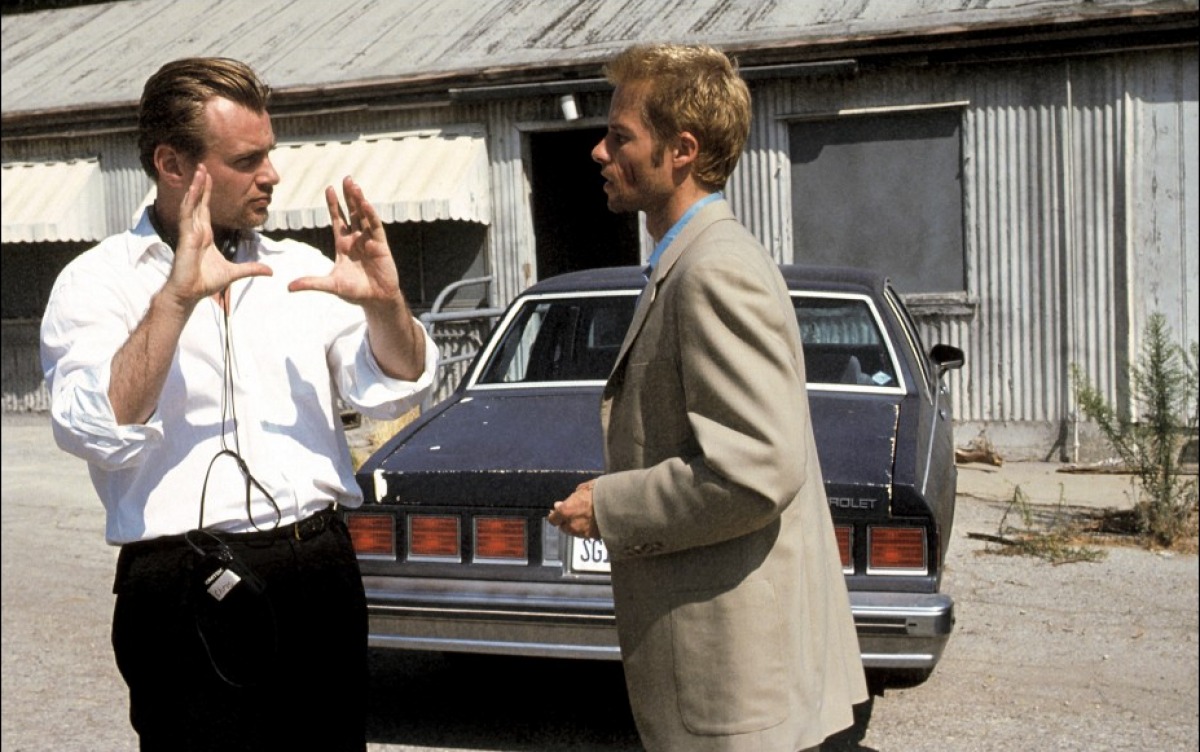
Christopher Nolan and Guy Pearce on the set of Memento (2000)
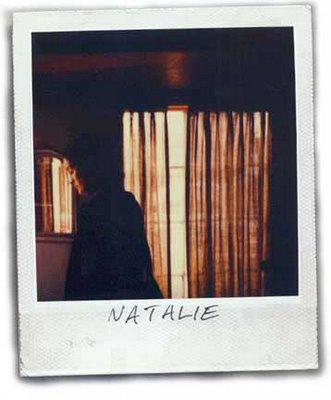
I will take some inspiration from this film in terms of some of the meetings that take place. Every time Leonard meets someone he cannot remember if he has met them before and so must check his photos and tattoos. Some of my ideas have elements where two characters meet for the first time and so I will take inspiration from the way Leonard reacts to meeting people.
One of the polaroids used my Leonard to help him remember people
This film is a brilliant piece of work and a great example of a good and well though out story. I specifically like the meeting elements because every time Leonard meets someone, it is like he is meeting them for the first time, something I would like to work into my own ideas. I will continue with my ideas process and draw some inspiration from elements of the story that is Memento (2000).

Story-Telling: Ideas From Real Life Experience

When thinking about what my story could be about I decided to look back upon real life experiences for inspiration. After looking back on some experiences I had a few ideas but there was one that stood out for me.

The other day when I was on the train a mother and daughter sat down on the seats in front of me. They were sitting there the whole time I was on the train. I sat quietly and listened to the way the two of them communicated which each other. The daughter was quite young so she didn't understand much and kept asking her mother questions. The two of them were colouring in some pictures and they seemed to have a nice relationship with one another.

This mother and daughter made me think about the relationship parents have with the children and the joy that new parents have when their child is born. It also made me think about the nerves that come about on the day a baby is born and the troubles some couples go through, for example parents that are not together.

The Idea

Waiting Room
From all this I thought about a story set in the waiting room of the maternity ward at a hospital. I wanted to create a story based around a father who doesn't have a great relationship with the mother and how this can all change when they meet their child for the first time. I wanted the father to have a conversation with a friend in the waiting room about what happened between him and the mother. I want to use the baby as a tool to bring the two young parents together again.


I will continue working on this idea, whilst still thinking about the others. I will develop and try out this idea to see if it works as a good story based around the starting point "The Meeting".

Thursday, 24 September 2015

Story-Telling: Boy Meets Girl (BBC Sitcom)

The BBC recently broadcast a new sitcom about a young guy who meets a much older woman. The twist on the story is that in the first episode we find out that this woman used to be a man. I chose to do some research on this show because of the scene when this happens. The scene in question is:


In this scene the boy, Leo, finds out that the girl, Judy, was "born with a penis". The scene then continues as a waiter over hears and has an awkward moment with Judy, all whilst Leo is just staring into the distance with a shocked look on his face. This theme is similar to themes I have already looked at when one character is shocked by something another character says, something which I would like to use in my own story. This surprise breaks the romantic feel the date had and replaces it with a quirky comedic moment. I like this theme and will attempt to build it into my own story.

Story-Telling: Initial Ideas

After finding out the brief for the Story-Telling unit I began to jot down a few ideas. Here's what I've written down so far:

Some of my initial ideas
These ideas include:

  • A boy meets girl situation set in a confined space (trapped in a room)
  • A business meeting (where something goes wrong)
  • Two people meeting to exchange illegal substances (something goes wrong)
  • An investigator meeting a witness or suspect (suspect won't play ball)
I will filter through and try out these ideas to decide which one works best and has potential.

Story-Telling: Soft (25 Work Pitch)

For one of our task we were put into pairs and asked to come up with a 25 word pitch for a short film by Simon Ellis. Before writing the pitch we had a group discussion and came up with a few key words that described certain elements of the film. Some of these words included contemporary, conflicting, relationships, family, masculinity and challenged. My 25 word pitch was:

"Contemporary drama set in an urban environment about a father and son who when both challenged by a gang learn new things about each other"

It was interesting to hear what everyone else said and it was clear that we all have different ways of interpreting a story, especially when it comes to summing it up in 25 words.